The Mature Creator’s Perspective
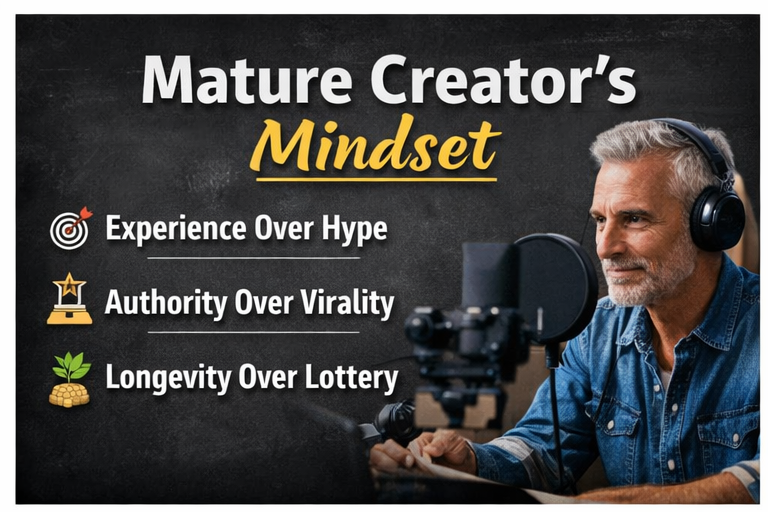
For creators over 40, mastery of a particular editing program or the newest viral trend rarely determines success. Rather, mindset—the foundation of your brand—is the main factor that determines long-term viability. Mindset is the operating system that determines whether a channel remains a transient, annoying pastime or becomes a long-term business asset in the developed creator economy. The shift to digital content requires professionals with decades of experience to stop looking for “viral lotteries” and instead focus on building a platform grounded in authority and specialized knowledge.
Reframing Age Strategically
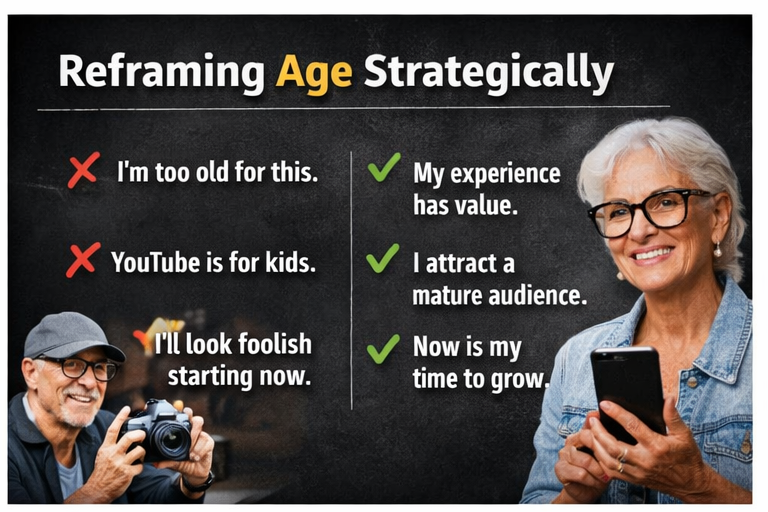
Fighting inherited “scripts” that imply the window of opportunity has closed is a common challenge when entering the creative space later in life. You must consciously break these stereotypes in order to succeed, seeing age as a filter for high-value audiences rather than a roadblock to advancement. The emergence of “granfluencers”—older adults who are flourishing online and redefining aging as a time of creative expansion rather than decline—validates this change.
Restricting Scripts Strategic Rewrites “I am specialized; my niche values experience over hype.” “I am too old / I missed the wave.”
“YouTube is only for kids/younger people.” “Age is a filter that attracts a high-value, mature audience.”
“I am learning a business skill; the awkward phase is temporary.” “I’ll look stupid starting this now.”
“This must blow up fast to be worth it.”This is a long-term asset that appreciates over time.
The Horizon of Multiple Years
Career and family obligations are frequently at their highest point at age 40 and beyond. Short-term YouTube use can quickly lead to burnout. Treating the platform as a multi-year project—a “slow burn” that integrates with your life—is the key to strategic success. The discipline of skill development and building a long-term business asset replaces the pressure to “go viral” when the horizon is 12 to 24 months rather than 3 weeks.
The Layer of “So What?”
An essential filter is a growth-oriented mindset. During the “awkward early phase,” when skills have not yet reached professional standards, it safeguards the creator. You preserve the psychological safety necessary to keep trying until you discover your own resonance by seeing low views as data points rather than a judgment on talent.
Connective Tissue: This psychological base is necessary before moving on to the next stage, which is a thorough examination of the internal narratives that keep you from ever clicking “upload.”
Recognizing and Eliminating Internalized Obstacles
Strategic advancement is frequently halted by “inner stories” that impede production, not the platform’s algorithm. In order to proceed, you must ask yourself, “Is that a fact, or a story?” in response to each doubt. The idea that “no one wants to hear from me” should be disregarded as a myth that is currently undermining your company’s infrastructure if it cannot be demonstrated to be true.
The Professional Pride Trap and Perfectionism
Professionals with experience are used to being competent. Because early work in a new medium is by definition unpolished, this poses a significant obstacle. The volume and feedback loops necessary for platform growth are destroyed by perfectionism, which is a growth-killer. You must allow yourself to ship “B-minus” work in order to scale, emphasizing the number of repetitions over the initial polish.
The Impediment of Tech Anxiety to Development
The self-limiting label “I’m bad with tech” results from mature creators’ perception that new technology is intrinsically dangerous. Use a “System Learning” framework to counteract this. AI, editing software, and cameras are force multipliers rather than barriers. The technical learning curve can be turned into a cognitive advantage because research shows that intentional learning in later life is strongly correlated with higher emotional well-being.
The Trap of Comparison
A strategic mistake that results in persistent niche-hopping is imitating the high-energy, trend-driven styles of younger creators. When you attempt to play the “youth game,” you lose the authority that comes with age and confuse the very audience that is looking for depth—those between the ages of thirty and sixty. It is necessary to distinguish between “Value-Driven” and “Trend-Driven.”
The Layer of “So What?”
Maintaining the consistency needed to develop a “sticky” audience requires overcoming these obstacles. An audience that has faith in your professional background will recommend you to others and eventually make a purchase from you, but this trust can only be established through the frequent exposure that tech anxiety and perfectionism aim to avoid.
Connective Tissue: After removing these internal obstacles, we can transition from psychological defense to strategic offense by creating your own “Experience Advantage.”
Developing the “Experience Advantage”
The ability to “weaponize” experience is the biggest competitive advantage for a creator over 40. Younger competitors cannot match the distinctive value proposition and “brand moat” created by decades of professional successes and failures.
Load-Bearing Stories as the Narrative Core
Your most effective brand positioning comes from your “before YouTube” life. Utilize particular narrative arcs to establish your authority based on your past:
- The Single Dad Entrepreneur: Discussing strategies that helped him maintain his sanity while juggling work and being a single parent.
- The Career Pivot: How to start over following a midlife layoff or burnout.
- The “Hard Way” Lessons: Particular mistakes that cost money and time, presented as a manual for others.
Theories vs. Teaching from Scars
Generic advice has worn viewers out; they are searching for “scars.” Take the example of the retired nurse, who succeeds by condensing thirty years of clinical experience into “real nursing wisdom” rather than by reciting a textbook.
- Content Assets: “Mistake of the week from my business,” “Story time from 2008,” or “What 20 years in this industry taught me about X.”
- Experience-Based Advice: Turning decades of labor into checklists and playbooks.
Genuineness as a Superpower
A composed, straightforward tone is a key differentiator in a time of carefully manicured personas. Mature audiences have an innate trust in the opinions of those who have “been there.” Lean into your natural, more genuine, unpolished tone; it fosters a deeper emotional connection with viewers going through similar life stages.
The Layer of “So What?”
You create a moat of credibility by focusing on “scars” and particular life stages (parenting teens, rebuilding finances). While shallow rivals can imitate your themes, they cannot replicate your past. In addition to shielding the brand from rivalry, this authenticity fosters a respectful community.
Connective Tissue: Moving on from “what” you say to “how” you say it, we now need to talk about the strategic behaviors needed to project this authority on camera.
Tactical Presence: Increasing Camera Self-Assurance
On-camera authority is a tactical skill that can be learned rather than an innate talent. To project the professional competence on which your brand is based, you must develop this presence.
The Protocol for Daily Repetition
Repetition is necessary to desensitize the body to the “this is weird” feeling that arises when speaking to a lens.
- 5–10 Minute Camera Reps: Take two to five minutes each day to record a video log. Editing and publishing are not necessary.* The Objective: Instead of viewing the camera as a threat, treat it as a familiar object. This rewires your brain to maintain composure under duress.
The Mental Model of “FaceTime”
The abstract concept of “the internet” viewing frequently causes anxiety. To increase presence, picture yourself on a FaceTime call with a single friend who is in dire need of your assistance. By focusing on the audience’s needs, you become less self-conscious and naturally adopt a conversational, laid-back tone.
Performance-Related Micro-Habits
Use these customs prior to recording in order to alert the nervous system to safety:
- The 60-Second Physical Warm-Up: Vocalize your introduction, take two deep breaths, and loosen your neck.
- Vocal and Facial Activation: To energize your expression, use tongue twisters, big smiles, and exaggerated vowel sounds.
- Explorer Mode: During recordings, practice self-correction in real time. This teaches you to stay in “Explorer Mode” rather than “Judge Mode,” keeping your cool when you make mistakes.
The Layer of “So What?”
These behaviors guarantee that you come across as an expert. Being calm and at ease is a sign of a mature brand’s competence. The bigger objective of developing into a reputable, authoritative voice in your niche is aided by regular daily repetitions.
Connective Tissue: After laying the tactical and internal groundwork, we need to coordinate these initiatives with a strategy that ensures the company’s long-term sustainability.
The Strategic Roadmap: Objectives, Measures, and Durability
Channel metrics need to align with life stages and career goals to ensure YouTube remains a business asset rather than a cause of burnout.
Goals of the Process vs. Outcome
Mature creators need to put “Process Goals”—actions they can directly control—above erratic “Outcome Goals.”
- Process Objectives: Testing one new title framework per video or committing to two uploads per week.* The Impact: Regardless of the algorithm’s volatility, concentrating on the process fosters long-term growth and a sense of accomplishment.
The Midlife SMART Runway
Building a “serious asset” should take 12 to 24 months. The “100-Video Rule” requires you to commit to 50 to 100 videos before assessing your success. This contrasts sharply with the popular “3-month trial” mentality, which is the main reason creators fail: they see sluggish early growth as a reflection of their value. Output and skill development are used to gauge success.
Mature Channels’ High-Value KPIs
Concentrate on indicators that drive business authority rather than vanity metrics:
- Click-Through Rate (CTR): Does your target audience find your thumbnail appealing?
- Average View Duration (AVD): Is your narrative supported by experience and keeps viewers interested?
- Lead Generation: Does the channel generate professional inquiries, clients, or course sales?
The Layer of “So What?”
Every minute spent on content compounds over time thanks to strategic alignment. Success for a creator over 40 comes from leveraging the inherent differentiator of a well-lived life to appeal to a specific audience, rather than pursuing virality.
Concluding Remarks
Success in the 40+ creator economy hinges on shifting from “I’m late” to “I’m specialized.” A mature creator turns their age into their greatest strategic asset by using the “fact vs. story” audit to neutralize internal barriers, weaponizing life experience through authentic storytelling, and adhering to the 100-video rule. Trust, depth, and the development of a long-term business asset that offers both creative fulfillment and professional authority are what define success.
Really well explained, the part about peptide analysis was backed by solid info, sharing this with my colleagues.